Culture can be broadly defined as shared behaviours, values, beliefs, adaptive strategies, traits, or ideas that are passed from generation to generation via social learning. In particular, culture is not fixed but evolves over time in response to external and internal pressures, including transmission biases, cognitive transformation, and social structures and processes. Examples of cultures evolved in natural systems include vocal learning (e.g., bird or whale songs), nest building, tool manufacture and use, foraging behaviour, and movement.
Cultural evolution, therefore, is a powerful metaphor and framework to model and design adaptation mechanisms in complex systems across scales. It offers the potential to evolve the individual agents through quasi-global cultural knowledge. Falling under the branch of evolutionary algorithms, there are also intriguing links to artificial creativity and open-ended learning. For example, creative mediums such as music and language have evolved through the substrate of culture in animals.
Cultural learning is what most strongly distinguishes humans from other animals.
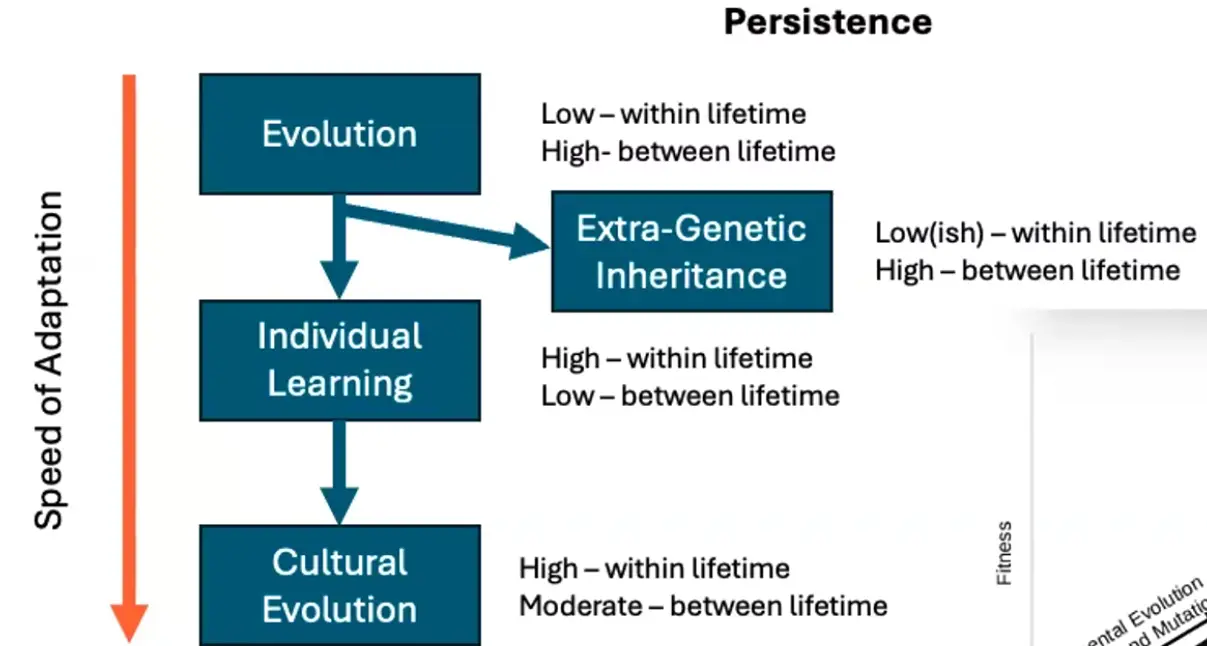
for evolution, if you change to quickly, good behaviors don’t stick
cultural evolution is a mechanism for adaptation on different / faster scales than natural evolution or individual learning
→ how to deal with variability quicker than evolution
How does culture become open-ended
Is only human culture open-ended? (i.e. do animals just copy behaviors that others have discovered, with culture just speeding up the process of learning and persisting behaviors, but not adding anything on top that could've been rediscovered by an individual, albeit more slowly?)
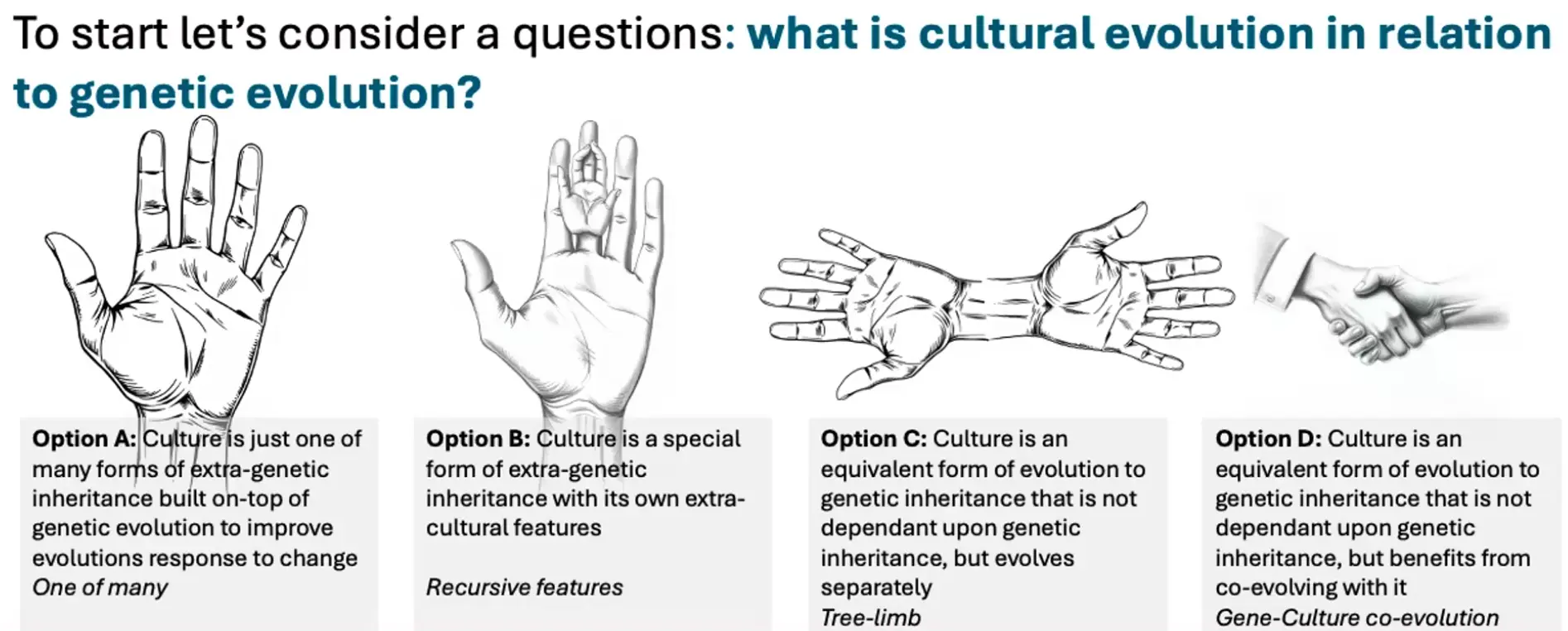
Can we view cultural evolution as a separate evolutionary system (on top of genetic evolution)?
talk by https://ryu.sg/
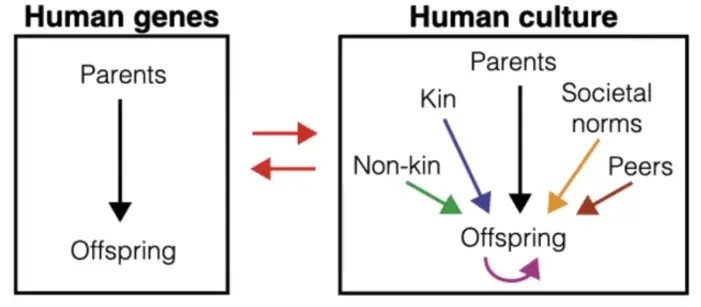
Cultural ratchet
Culture accumulates.
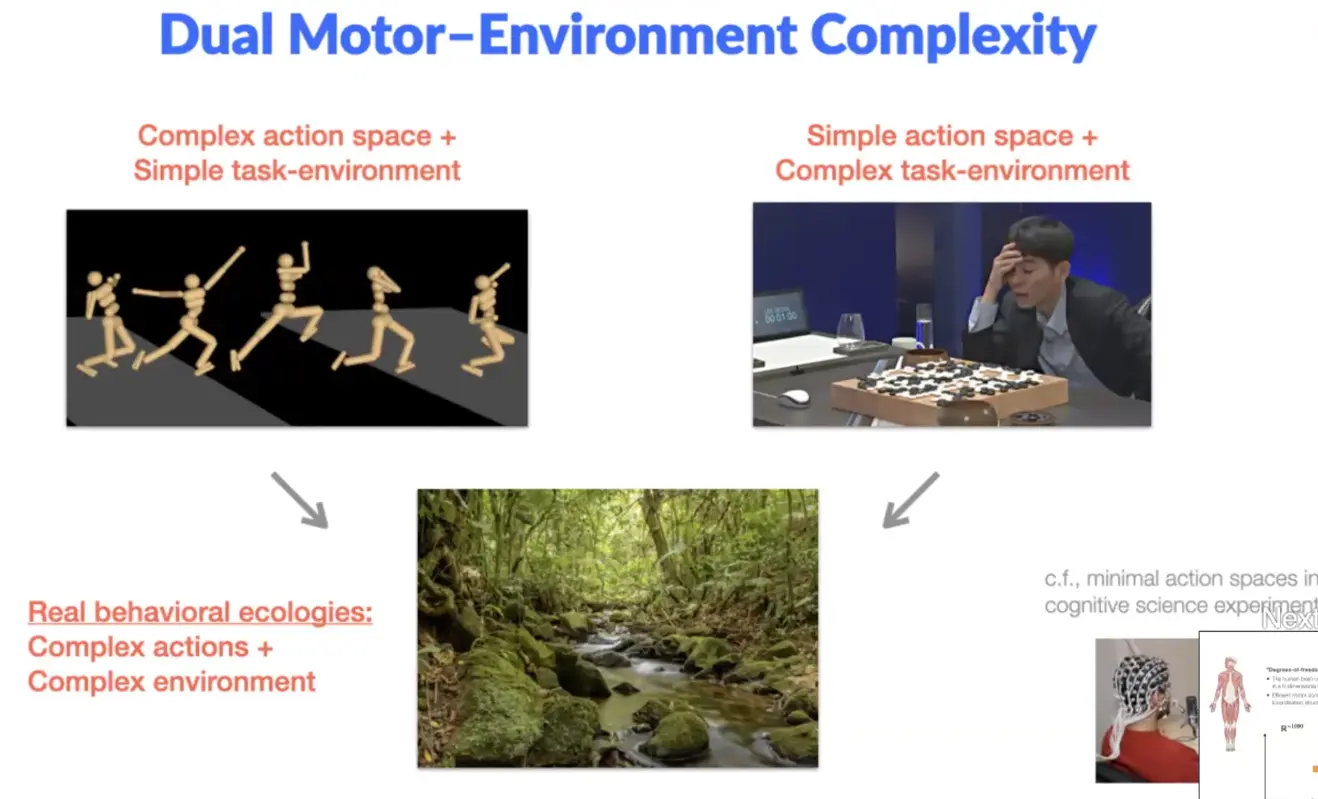
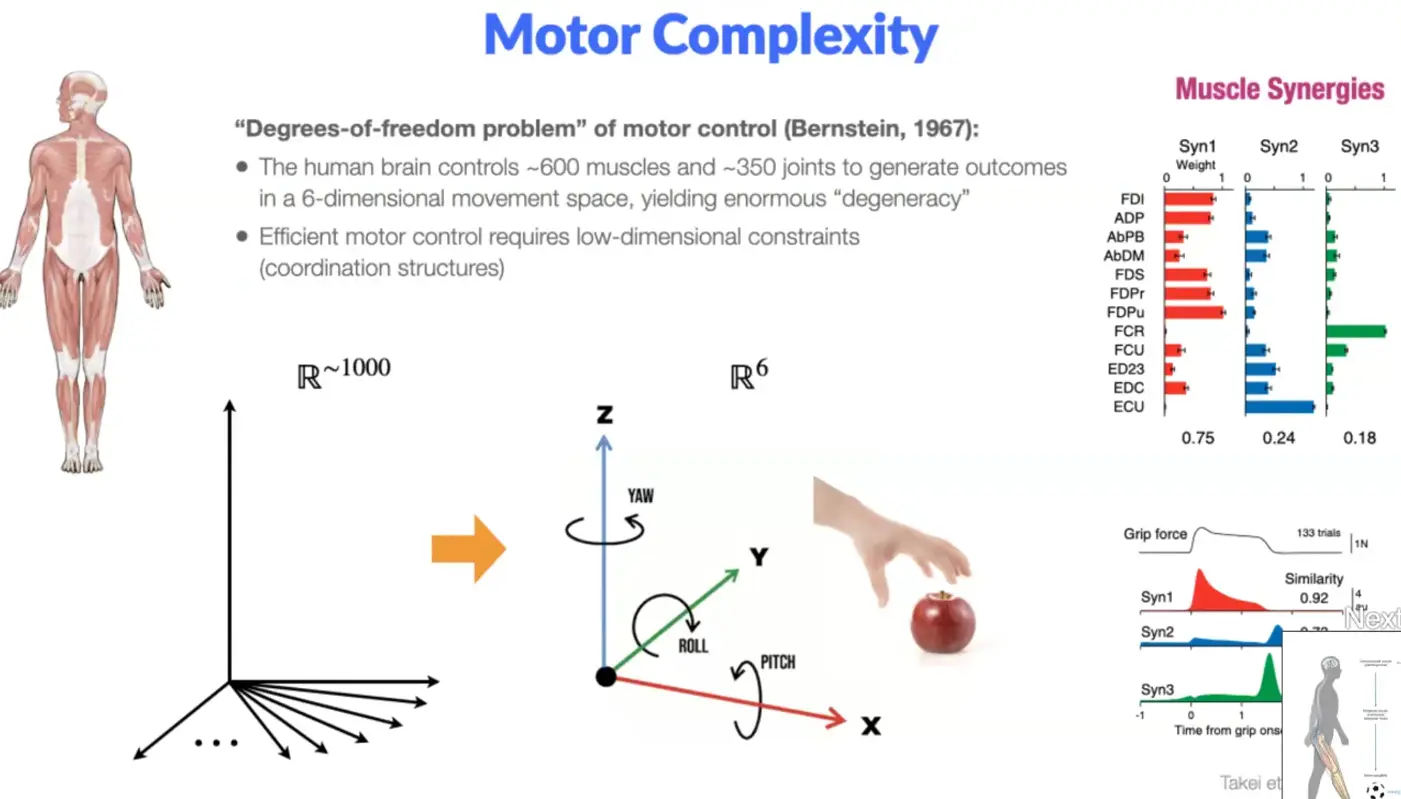
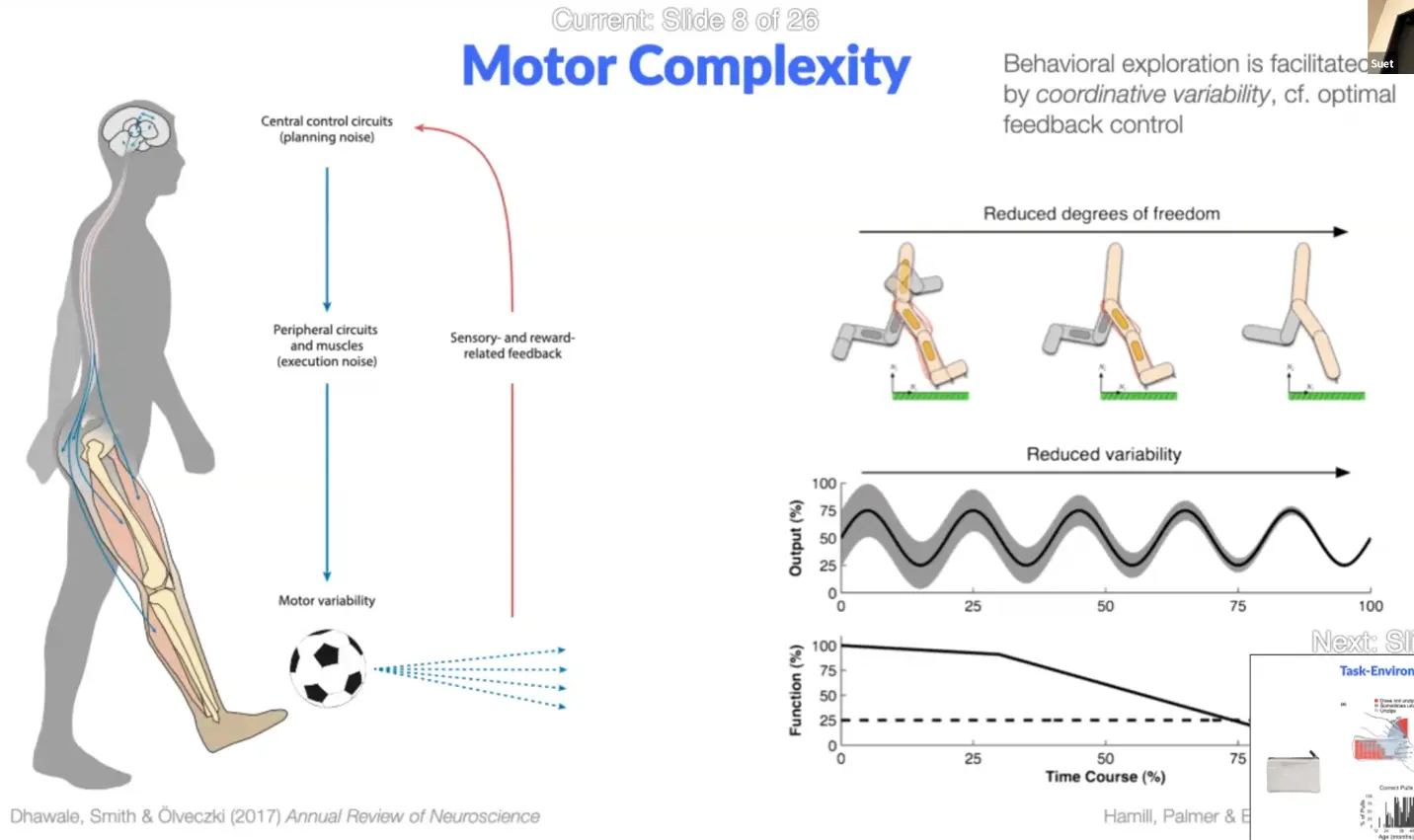
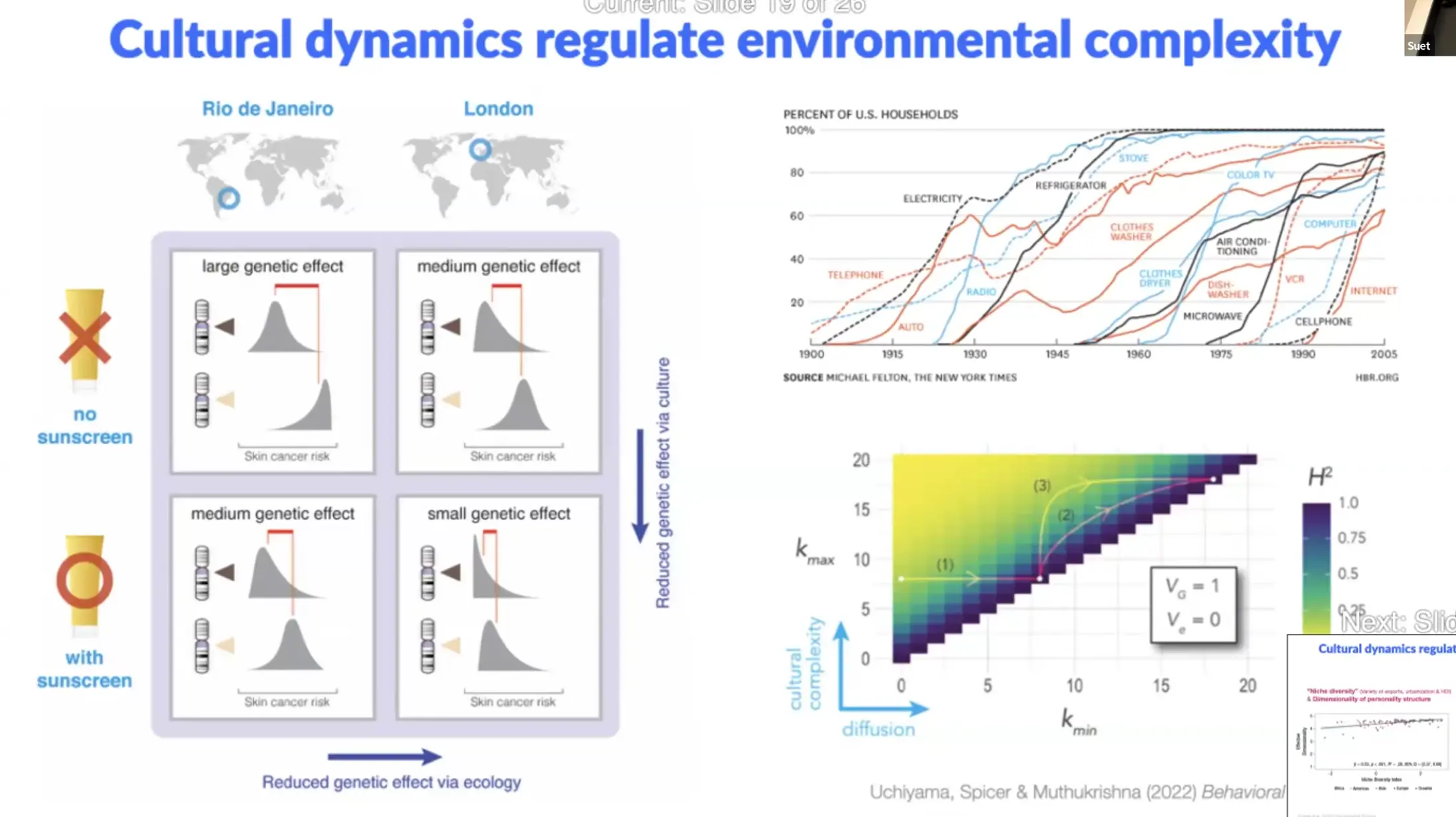
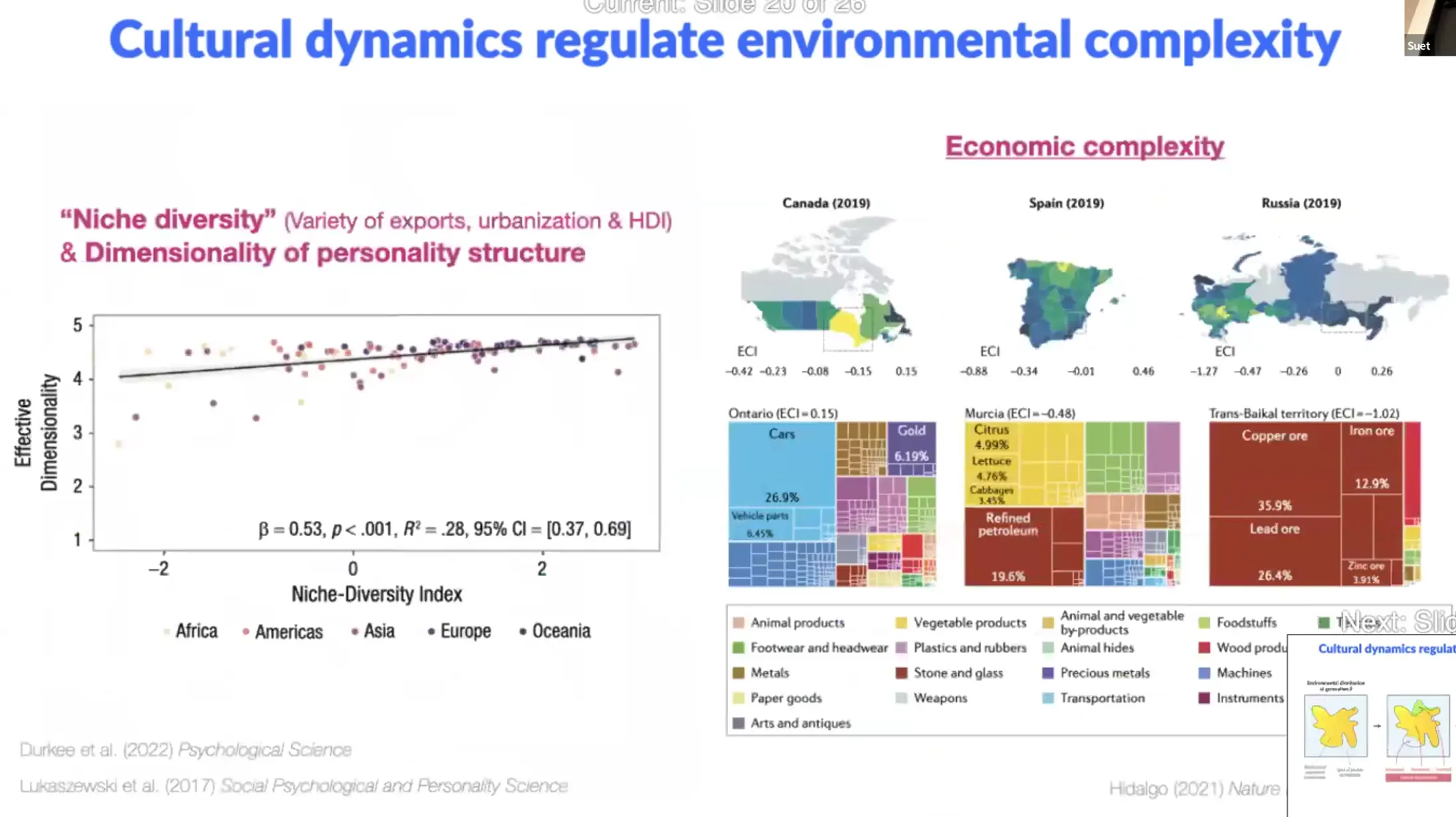
Motor cortex "groups" behaviors.
Literally like PCA.
Children's play
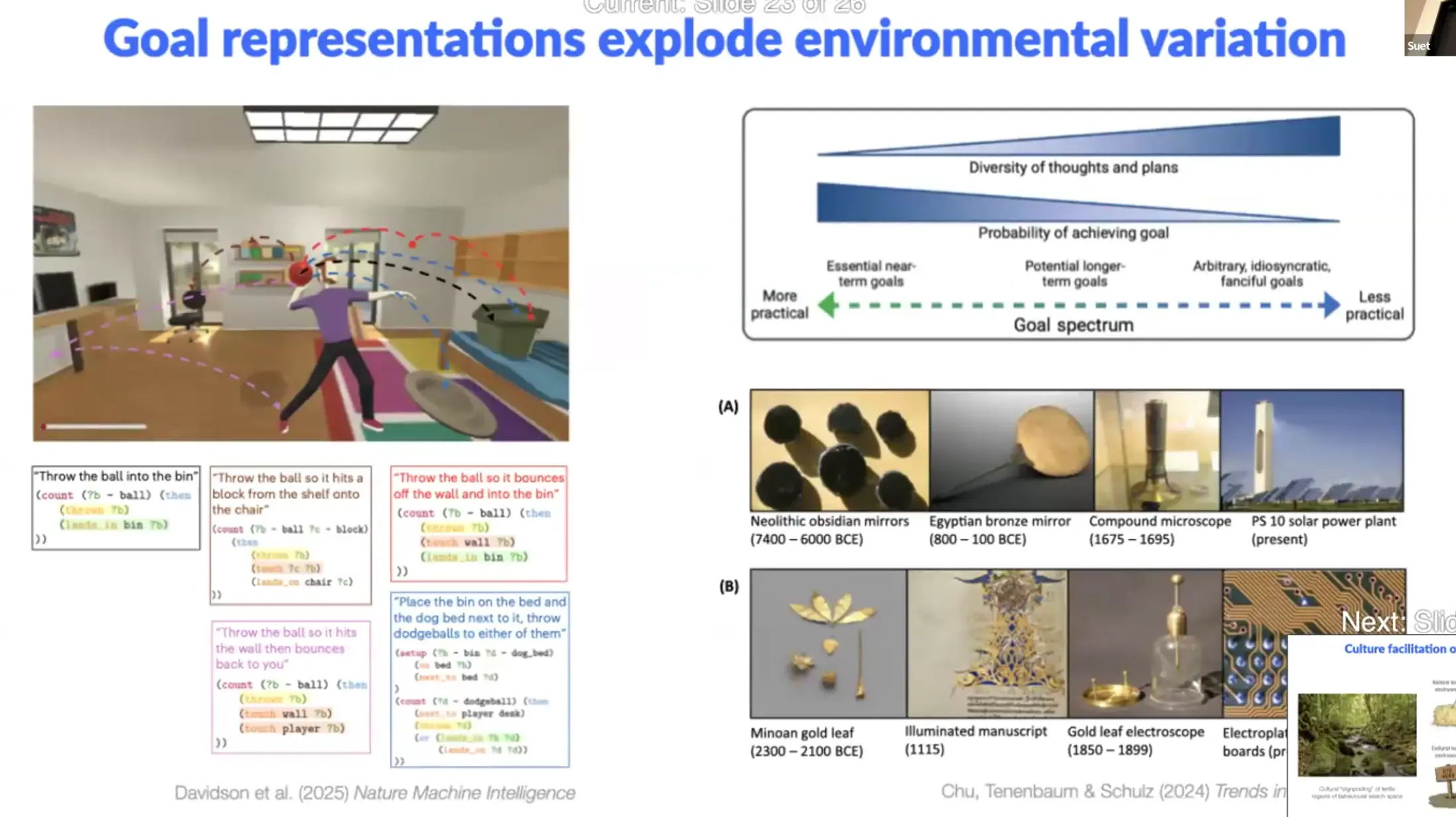
Children are very good at coming up with arbitrary sets of rules with no utility.
(if you step off the white part of the crosswalk, you die)
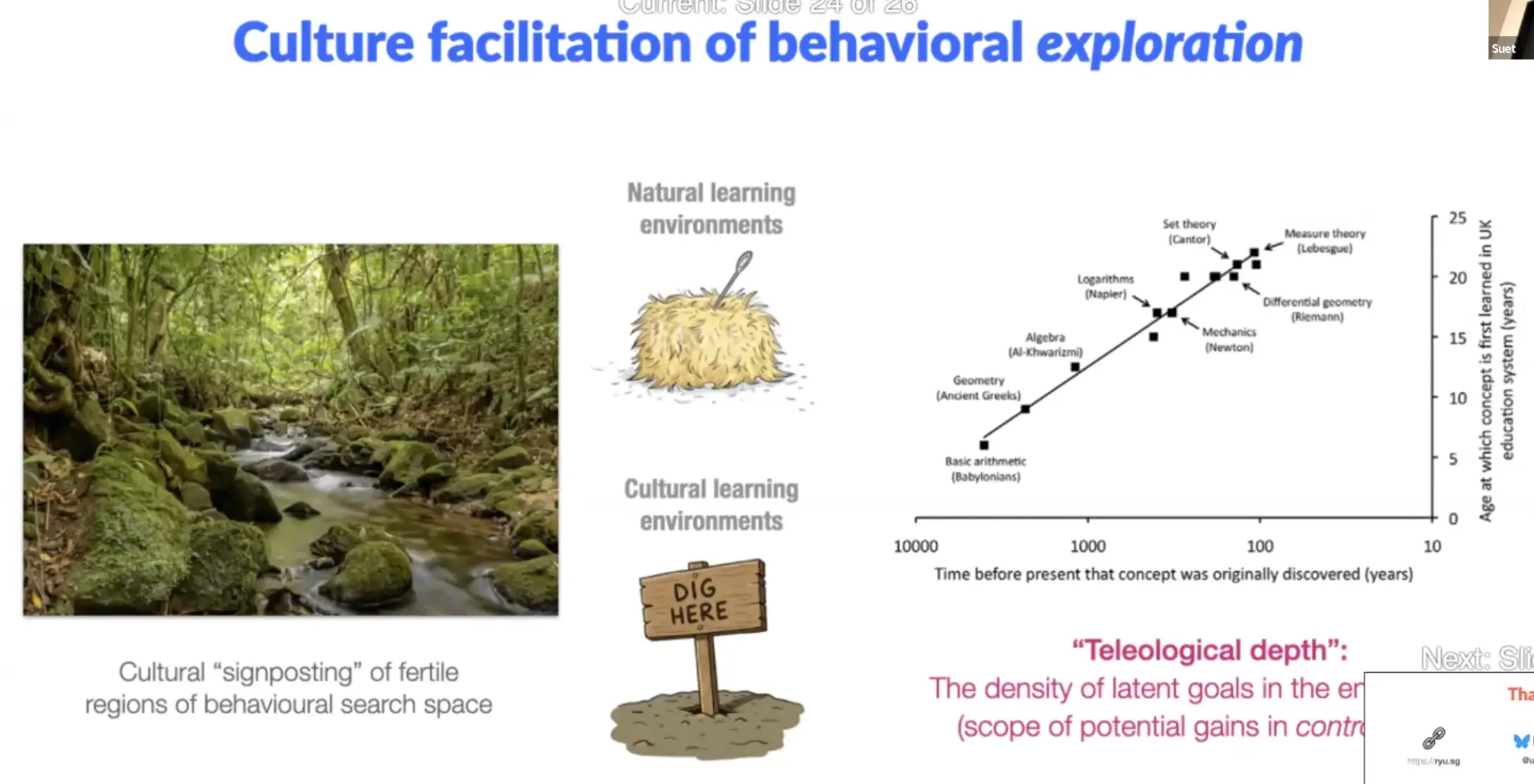
→ Expands the range of behaviors we can perform / opens up niches.
Initialilly useless pursuits lead to useful inventions
(polishing a stone → mirror → microscope → solar panel → telescope → …)
(gold leaf → illuminated manuscript → gold leaf electroscope → electroplating → …)
Creating our own goals explodes the space of possible behaviors.
→ Suggests the existence of latent goals.
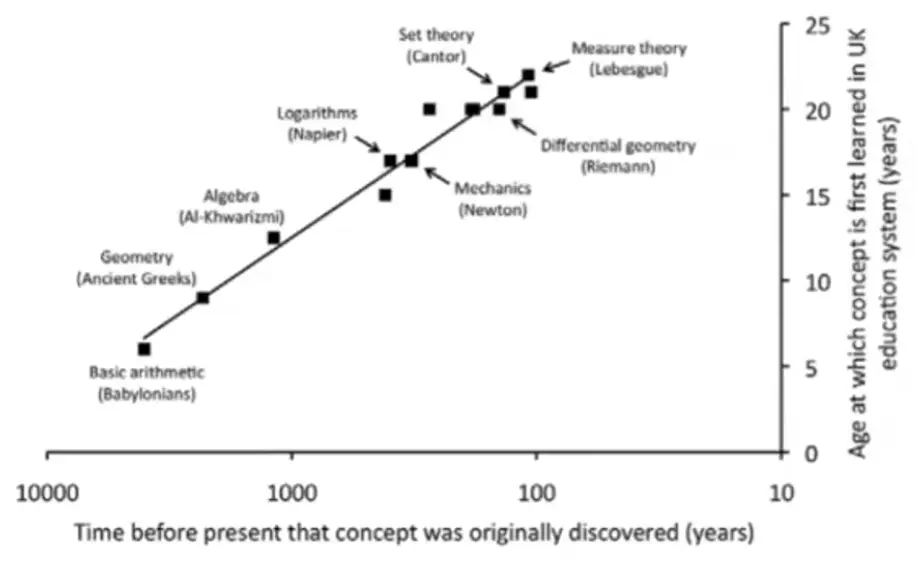
Logarithmic scale of learning mathematical concepts.
check out some of these / his latest papers
Bees can spread information culturally through populations.
E.g. they can learn from bees that were taught to pull a string to access sugar, while very few untrained bees solve the task spontaneously on their own: video
Link to original
Figure 3: Go play before and after the introduction of AlphaGo. A AlphaGo, in its match against Go world champion Lee Sedol, made a highly unusual and strategic 37th move by placing its stone further from the edge, towards the center of the board, deviating from the traditional strategy of securing territory along the periphery during the early stages of the game. With this unconventional move, AlphaGo not only broke with centuries-old Go traditions but also paved the way for its ultimate victory in the match. B (reproduction based on ) Decision quality of professional Go players as evaluated by an algorithm performing at superhuman level. Decision quality significantly increased after Lee Sedol was beaten by AlphaGo on March 15, 2016 (shaded area).