Conditional probability
are two events (outcomes) of a random experiment. The probability of an event given that another event has occurred is:
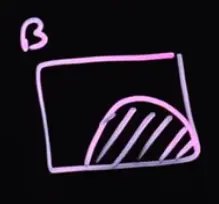
If we know that has occured, becomes the new sample space, and we rescale so has area one (). Everything outside of is discarded, i.e. the only part of that survives is :
→
In this case, becomes a lot more likely, as it occupies a larger fraction of the sample space than it did before.
It’s easy to see geometrically that the reverse is not true (completely different proportions).
Two dice are rolled. … one dice is a 3. … the sum of the dice 6. What’s ?
→ , since there’s one out of the 5 possible events (given C), where either of the dices is a 3.
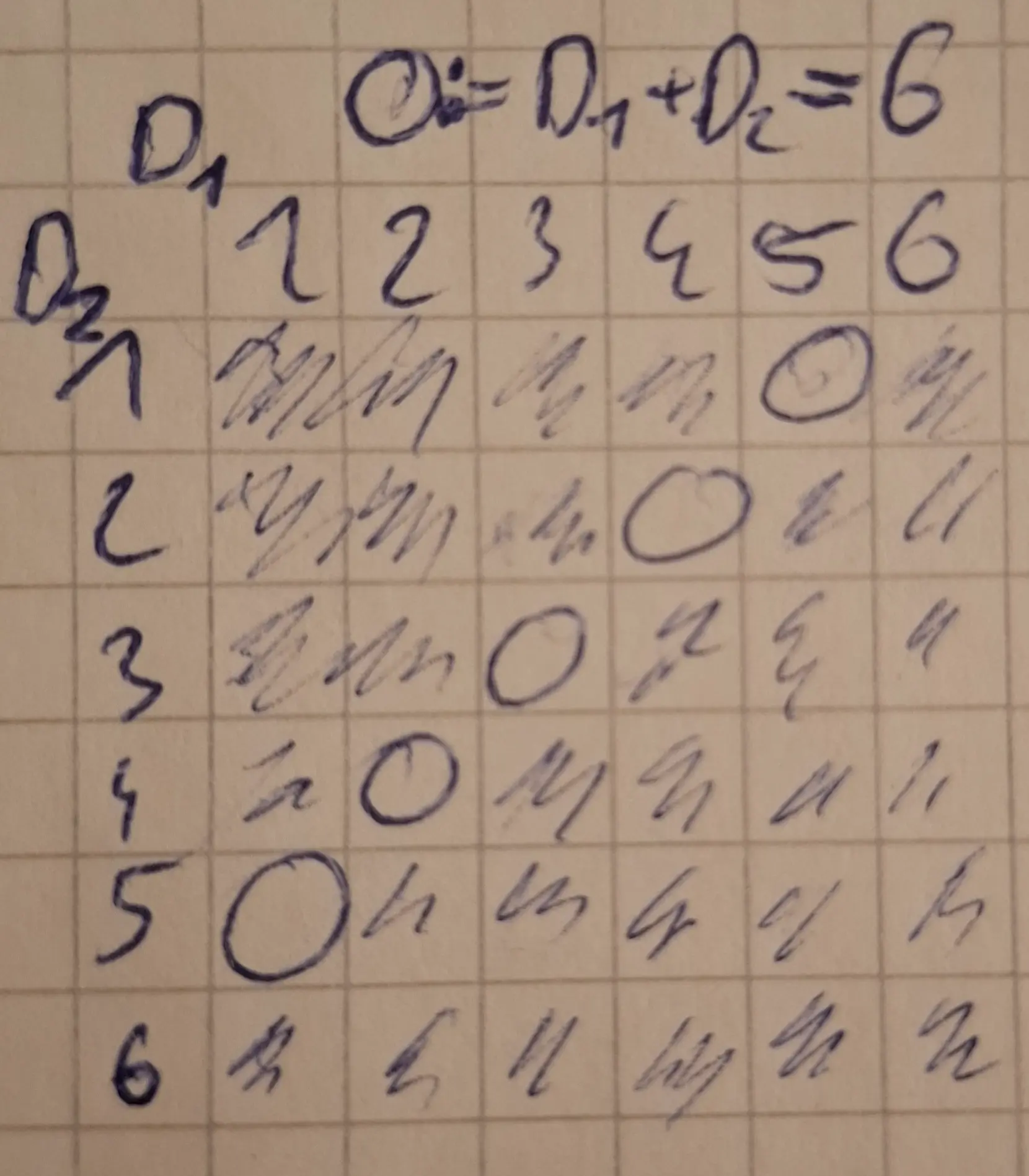
What's , from first principles?