Key points from skimming slides again days after watching:
novelty search can often lead to simpler, more effective/general solutions than objective-based optimization, through the discovery of useful stepping stones that would otherwise be overlooked:
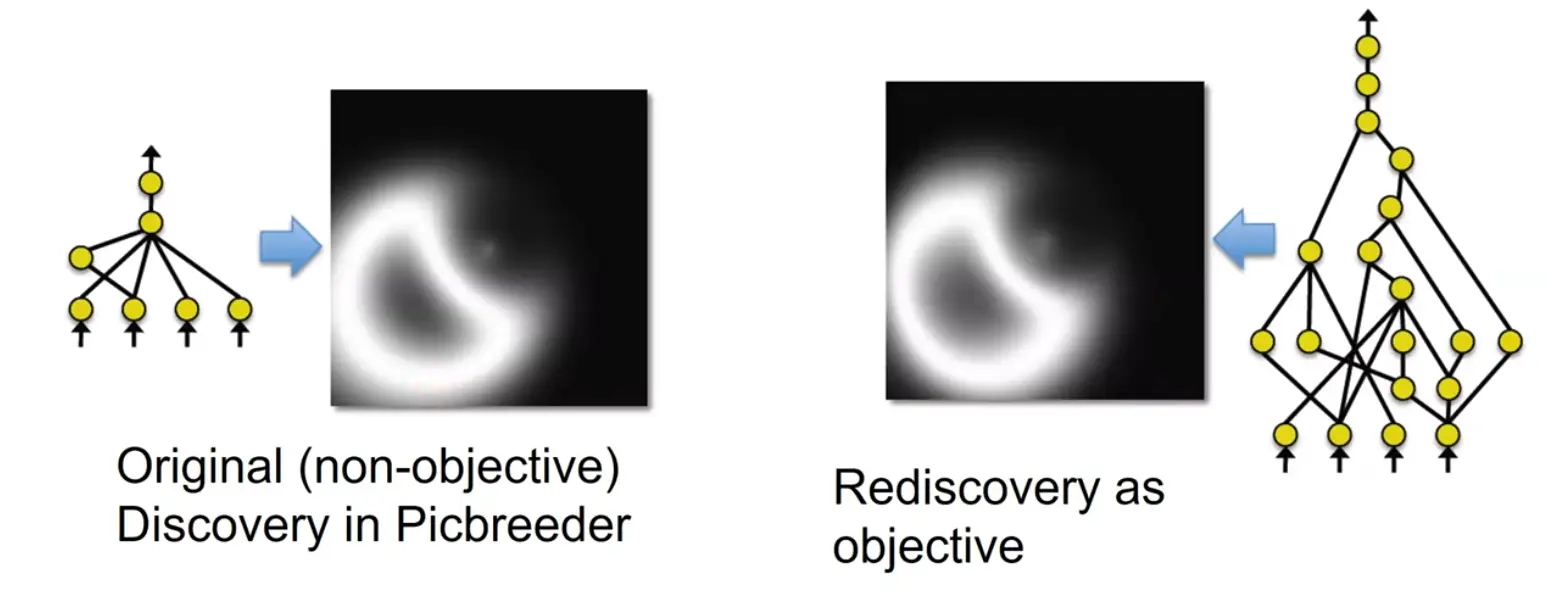
stepping stones almost never resemble their destinations
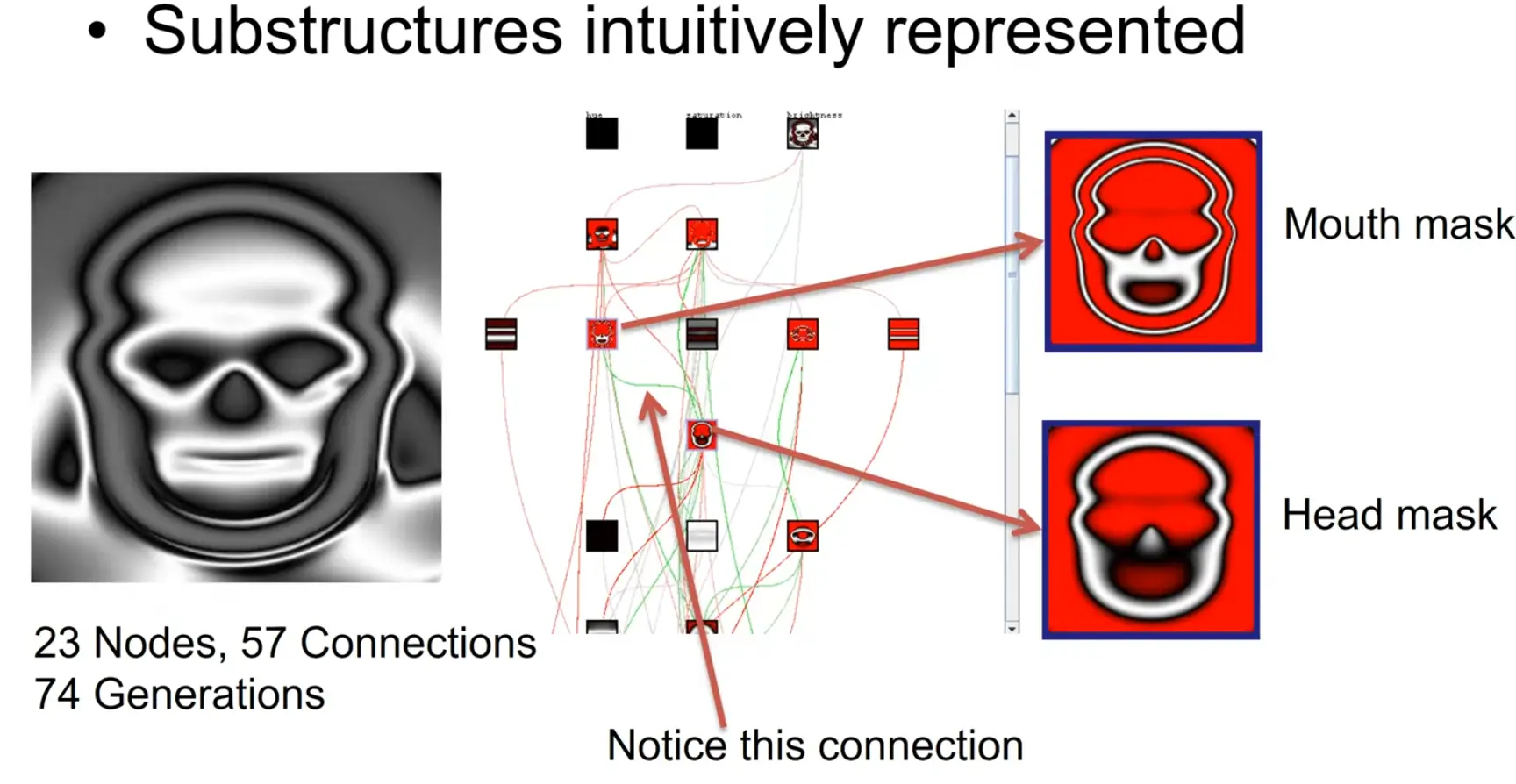
Open ended discovery leads to fundamentally different organization/ representation: Representations are more meaningful / composable / efficient / natural
Explains DNA to some extent: Perturbation is sensible / canalized.
Should representations look like DNA?
If you “think open-endedly” (not optimizing for one specific (end-)goal), do you obtain representations that are different than those who don’t? (broader / more organized / easier creative thinking)
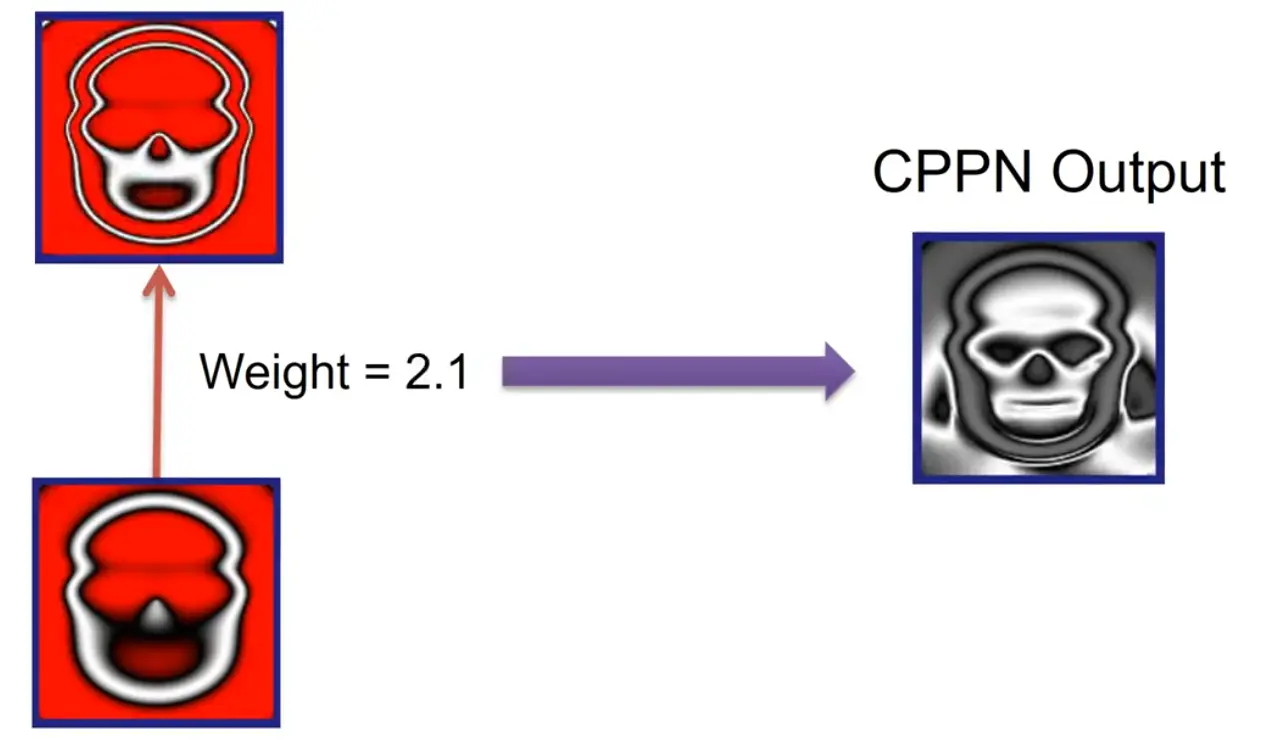
A single weight controls the mouth aperture:
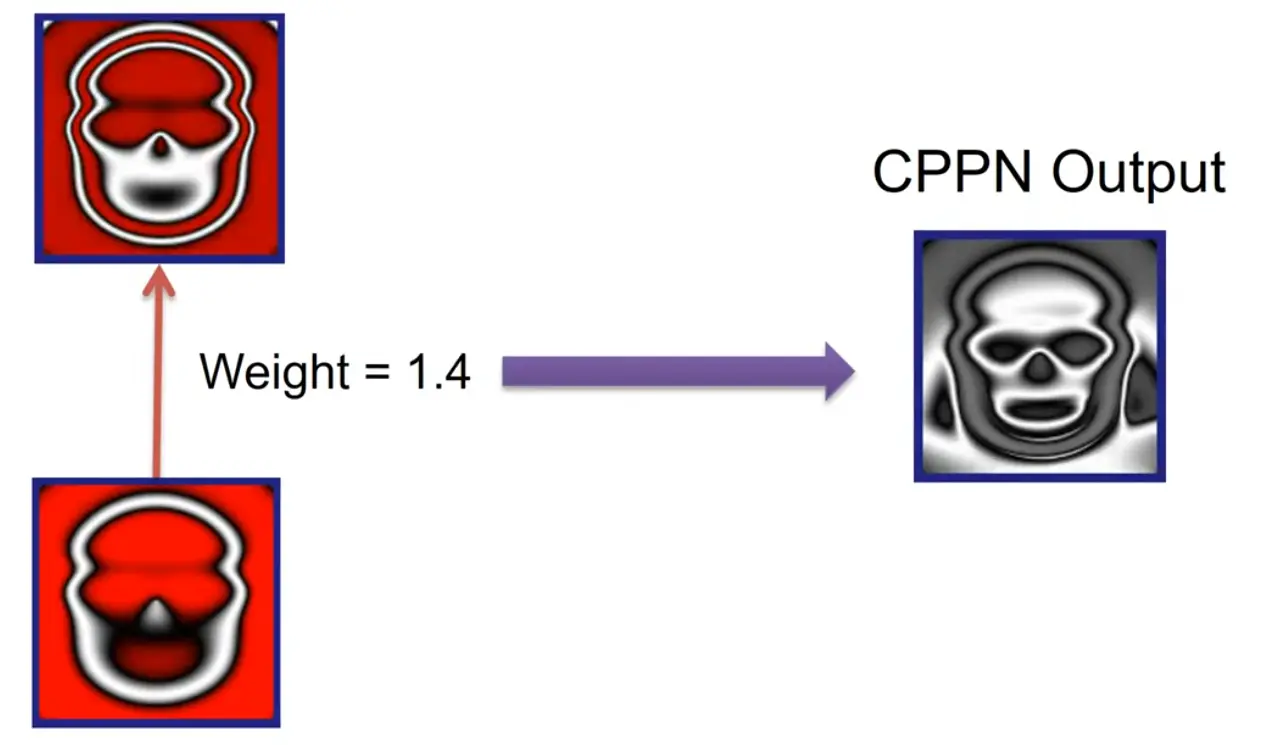
(other example: single weight controls the swing of the stem of an apple)
The environment is always a brick wall.
Evolution through Large Models
Might LLMs be the bridge to reality as the env?
unboundedness of the universe
A place where anything can be expressed (universal computation) is a place where anything can happen
Computation is a metaphor for expression, but expression happens through a medium. In our universe the medium is physical reality.
Invention: When anything is possible, every end is a beginning.
The easiest way here again is code, inventing tools.
Current RL: immutable environments. Actions are about attached conditional things (mario jumps), but invention changes the outer environment and leaves behind a detached artifact (mario crafts a sword).
→ Endless possibility of detached conditional things (language is one of them).
The API of earth (particles in the ground) sucks.
→ Koding koding koding?